

Why Do My Circuit Breakers Keep Tripping?
Power interruptions in a home are serious hazards that go beyond mere inconvenience. If this disruption is not the result of a utility outage, but rather a circuit breaker trip, you may have a serious underlying issue that needs immediate attention. Here are the common reasons why your circuit breaker might be tripping frequently.
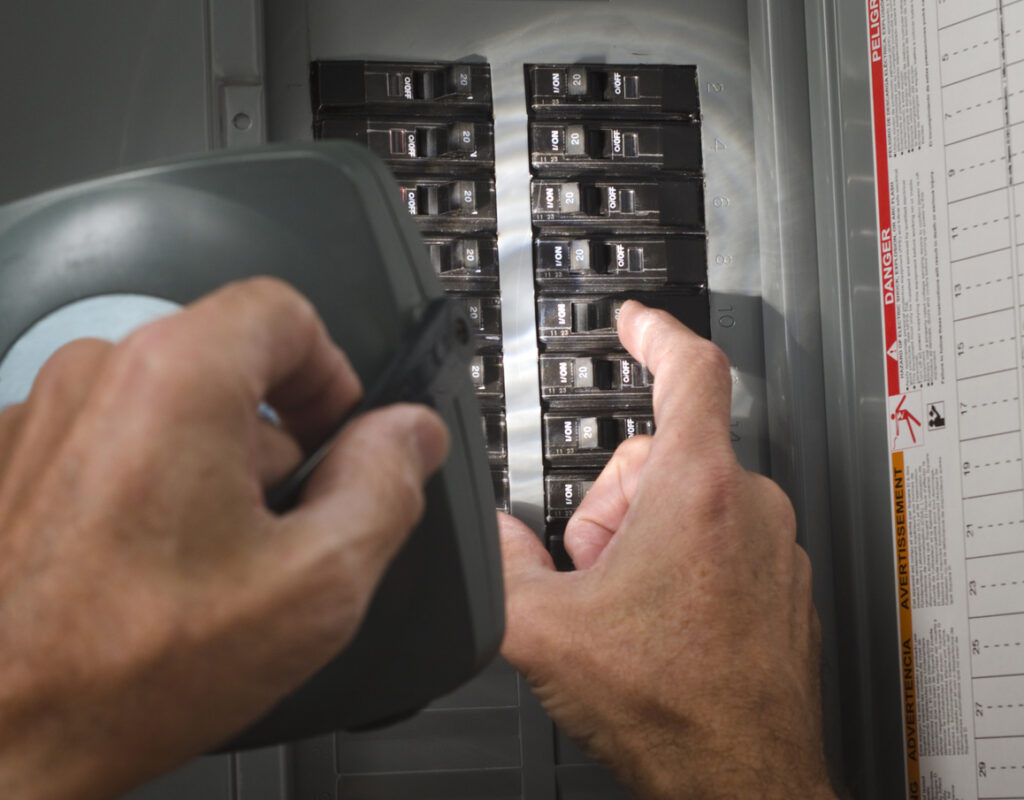
The Role of Circuit Breakers
You need to understand that a circuit breaker is designed to trip. That is its purpose and its most important safety function. Breakers protect your electrical system by cutting power the moment they detect a condition that could cause overheating, wire damage, or fire.
For instance, when a circuit carries more current than it was built to handle, the breaker interrupts the flow to prevent the wires from reaching unsafe temperatures. Breakers also respond to faults, such as when electricity escapes its intended path or when damaged wiring creates a sudden surge of current. In every case, the trip is a protective action meant to stop a dangerous situation before it escalates.
The Most Common Reasons Your Circuit Breaker Keeps Tripping
A breaker that trips occasionally is doing its job. A breaker that trips repeatedly is telling you something is wrong. This can happen for several reasons.
You Have an Overloaded Circuit
A circuit is a closed, continuous path that electricity follows from your main electrical panel to a device and back again. Think of it as a highway. A highway can only handle a certain number of cars in its lanes before traffic slows or stops. A circuit works the same way. It has a specific rating that determines how much electrical load it can safely carry at a time. When too many devices draw power from that same path, the demand exceeds what the wiring and breaker were designed to handle. The breaker responds by tripping to prevent the wires from overheating and creating a fire hazard.
Older homes with limited circuits are more prone to this problem because modern appliances often require more power than the original electrical system was built to support. To elaborate, back then, a 30- to 60-amp service was sufficient to support an entire home. Today, a modern, energy-efficient HVAC system requires a dedicated 30-amp, 240-volt circuit.
You May Have a Short Circuit
A standard circuit consists of three wires. These are a hot wire that carries the current to the appliance and a neutral wire that returns current to the panel to complete the circuit. There is also a ground wire to provide a safe path for fault current. Standard US color coding uses black or red for the hot wire, white for the neutral wire, and green for the grounding wire.
These wires are not supposed to touch each other under normal conditions. When a hot wire makes direct contact with a neutral wire, the electrical current bypasses the intended path it is supposed to follow to make a complete circuit. This creates a sudden surge of current through the wiring with far more force than it was designed to handle. The circuit breaker will respond instantly by tripping to stop the flow of electricity.
You May Have a Ground Fault
A short circuit occurs when the hot and neutral wires touch. A ground fault happens when the hot wire comes into contact with a grounded surface or the grounding wire. Similarly, this creates an unsafe flow of electricity that diverts away from the intended circuit and into a path that was never meant to carry current.
Ground faults are common where moisture is present, such as in kitchens, bathrooms, basements, garages, and outdoor outlets. Water is also a conductor of electricity. So, when it enters an outlet, appliance housing, or touches the wires, it will send the current to the ground, interfering with the loop.
Your Breaker May Be Worn Out
A circuit breaker is a mechanical system that naturally wears out over time. It has an average lifespan of 15 to 30 years. This lifespan is influenced by load frequency, maintenance, and environmental conditions. For instance, if your home experiences high humidity or has poor indoor air quality, the internal components of the breaker can deteriorate faster. Heat, dust, and repeated tripping also place stress on the mechanism. The springs, contacts, and internal sensors gradually weaken, which makes the breaker either overly sensitive or slow to respond.
A worn breaker is a home hazard. It can fail to trip when it should, which increases the risk of electrical shock or fire. It can also trip too easily, which leaves you without power even when the circuit is not overloaded or experiencing a fault.
Your Home Appliances Are Faulty
If you have a malfunctioning system, such as an HVAC unit or other major appliance, your circuit breaker may trip frequently. A faulty heating or cooling system often works harder than it should. This means it consumes more energy and thus draws more electricity than the circuit was designed to handle. When the electrical demand rises beyond safe limits, the breaker trips as a protective measure.
Appliances that are failing internally can also create unstable electrical conditions. A motor that is seizing, a compressor that is short cycling, or a component that is overheating can all cause sudden spikes in current. These spikes force the breaker to shut down the circuit to prevent damage.
Be alert to notice when your home appliances are failing. You may notice unusual noises, burning smells, inconsistent performance, or frequent resets. These warning signs often show up before the circuit breaker starts tripping.
How to Deal With a Frequently Tripping Circuit Breaker
Electrical problems are dangerous. They demand immediate intervention. Here’s what you need to do when your circuit breaker trips.
Step 1: Identify the Tripped Breaker
When electricity is suddenly cut, go to your electrical panel and look for the breaker that is no longer in the “on” position. A tripped breaker usually sits between on and off, or it may feel loose when you touch it. Once you locate it, switch it fully to the off position.
Step 2. Unplug Everything on the Affected Circuit
Your electrical panel contains multiple breakers, each supplying power to a different circuit. The breakers that remain in the on position will continue delivering electricity to their respective areas. The rooms or systems without power after the trip are the ones connected to the affected circuit. Unplug all devices and appliances on that circuit. This will keep your home safe as you wait for professional help.
Step 3. Call an Electrician for Expert Help
As discussed, there are many reasons why a circuit breaker can trip. A professional can determine the exact cause and recommend a long‑term solution. Breaker trips caused by damaged wiring, ground faults, short circuits, or worn electrical components require trained expertise. Attempting to diagnose or repair these issues without proper knowledge can create serious safety risks.
Contact Iddings Electric for Professional Help
Don’t hesitate to contact Iddings Electric when your circuit breaker keeps tripping. Our certified electricians will perform a thorough inspection and provide reliable solutions that’ll keep your home safe and powered. We offer emergency electrical services, so you can reach out to us at any time.
Call Iddings Electric today for professional electrical services in New Holland.

Our Promotions
Contact Us
Who We Are
Central PA’s Trusted Electricians Since 2002
- Fostering lifelong relationships with each customer
- Completing excellent work without cutting corners
- Having a courteous, friendly, professional attitude
- Offering fair, upfront pricing on all electrical services
- Boasting 20+ years of electrical service experience