

Power Surges in Older Lancaster County Homes: What to Know Before the Next Summer Storm
Lancaster County, PA, is rich with history, and many of us live in homes that reflect that heritage. These older houses have character and charm that modern ones can’t replicate. However, they also present unique challenges, especially when it comes to their electrical systems. During a Pennsylvania summer with its unpredictable thunderstorms, you need to consider a hidden threat to your home and electronics: power surges.
While your house’s classic architecture may have stood the test of time, its original wiring was never designed to handle the demands of modern life. The combination of sensitive electronics, high-powered appliances, and an aging electrical infrastructure makes older homes particularly vulnerable to damage from electrical surges. We’ll explain what power surges are, why they pose a significant risk to older homes in our area, and what you can do to protect your property before the next summer storm rolls in.
What Exactly Is a Power Surge?
A power surge, or transient voltage, is a sudden, powerful increase in the voltage flowing through your home’s electrical system. These spikes are incredibly brief, often lasting only a few millionths of a second, but they carry enough power to cause significant damage. Think of it like a sudden burst of water pressure in a pipe. If the pressure is too high, it can damage everything that connects to it.
Many homeowners associate power surges exclusively with dramatic lightning strikes, but smaller, less obvious surges happen far more frequently. These events can originate from both outside and inside your home, posing a constant threat to your valuable electronic devices.
Common Causes of Power Surges in Our Area
Understanding the sources of power surges is the first step in protecting your home. In Lancaster County, we see a variety of causes, from severe weather to everyday appliance use.
Severe Weather and Lightning Strikes
Summer in Pennsylvania means thunderstorms. A nearby or direct lightning strike is the most powerful and destructive cause of a power surge. A single bolt of lightning can send millions of volts of electricity through utility lines, overwhelming a home’s electrical system in an instant. Even a strike that hits the ground some distance away can induce a significant surge in nearby power and communication lines.
Utility Grid Fluctuations
The electrical grid that serves our community is a complex network. Sometimes, issues beyond your property can cause surges. This can happen when the utility company performs grid switching, a tree branch falls on a power line during a storm, or equipment at a local substation malfunctions. The high demand for air conditioning during summer heat waves can also strain the grid, leading to voltage irregularities that can affect your home.
Internal Surges From Major Appliances
Surprisingly, experts estimate that more than half of all power surges arise from within your home. Large appliances with powerful motors, such as air conditioners, refrigerators, and washing machines, draw a significant amount of electricity when they cycle on and off. This constant switching creates small but frequent surges throughout your home’s wiring. While one of these small surges may not cause an immediate outage, their cumulative effect can degrade sensitive electronic components over time, leading to premature failure.
Why Older Lancaster County Homes Are More Vulnerable
A modern home is built with an electrical system designed for today’s technology. An older home, however, often has an infrastructure that is ill-equipped to handle the electrical loads and potential volatility of the 21st century.
Outdated Wiring and Electrical Panels
Many historic homes in our area may still contain outdated wiring systems like knob-and-tube or wiring with brittle, degraded insulation. These systems lack the safety features and capacity of modern wiring. Also, outdated electrical panels, such as old fuse boxes or early circuit breakers, may not be able to handle the amperage that a modern household requires. This infrastructure is less resilient and more susceptible to damage from voltage spikes.
Lack of Modern Grounding
A proper grounding system is a critical safety feature of any modern electrical system. It provides a safe path for excess electricity to travel into the earth, away from your home, appliances, and family. Unfortunately, many older homes were built before modern grounding standards were established and may have inadequate or nonexistent grounding. Without this path of least resistance, a power surge has nowhere to go but through your home’s wiring and into your sensitive electronics.
The Hidden Dangers of Unchecked Power Surges
The damage from power surges isn’t always as dramatic as a smoking television set. Often, the harm is gradual and goes unnoticed until a device fails unexpectedly.
Gradual Degradation of Electronics
The small, frequent surges from internal appliances can cause what is sometimes called electronic rust. This is a slow, cumulative degradation of the delicate microprocessors and circuits inside your computers, smart TVs, routers, and modern kitchen appliances. This silent damage shortens the lifespan of your devices, forcing you to replace them much sooner than expected.
Catastrophic Appliance Failure
A powerful surge, typically from a lightning strike or major utility event, can cause immediate and catastrophic failure. It can instantly fry the motherboards in your computers, burn out the compressor in your refrigerator or HVAC system, and render expensive home entertainment systems useless. The cost of replacing these items can easily run into thousands of dollars.
Risk of Electrical Fires
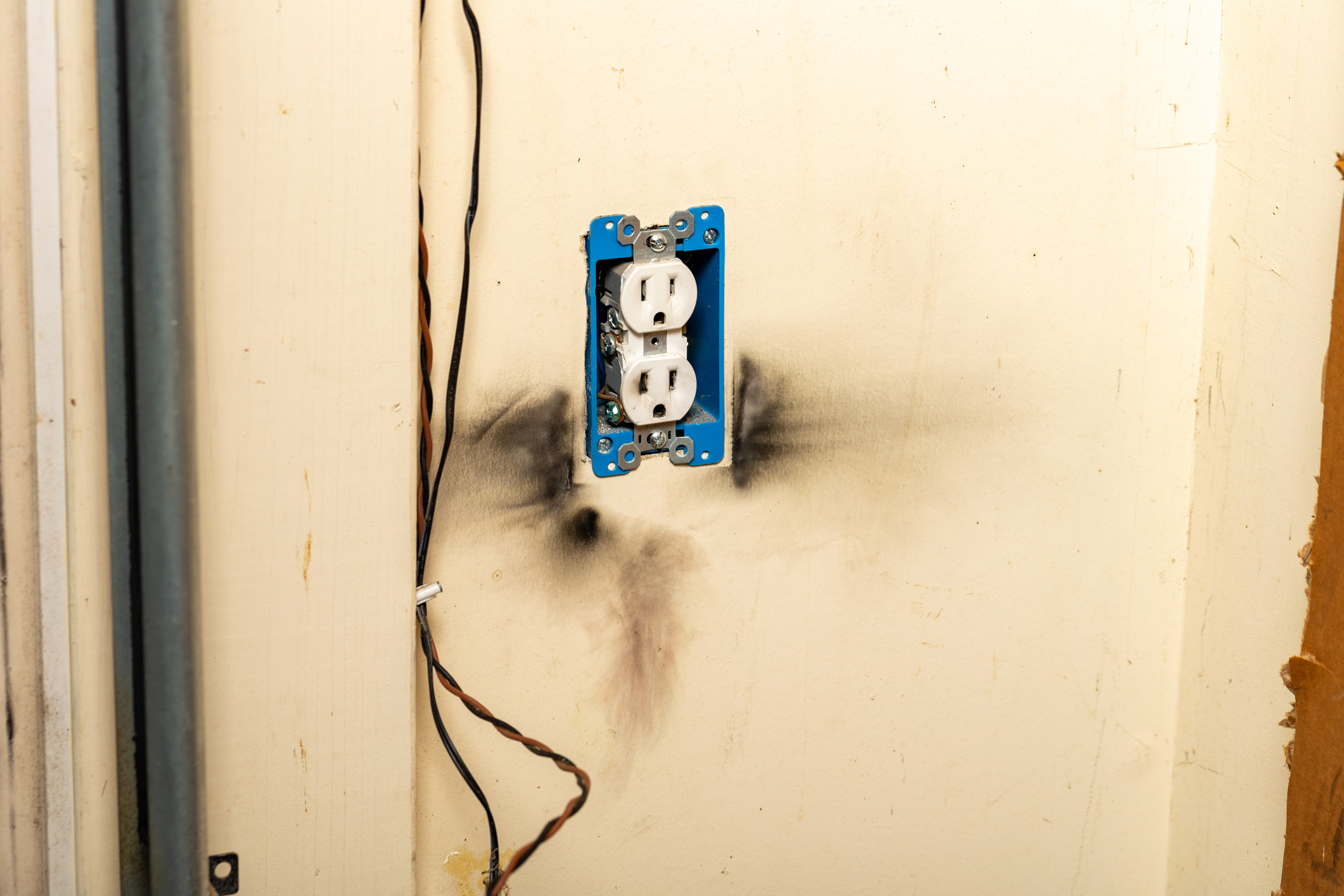
The most serious risk associated with power surges is fire. A powerful voltage spike can cause wiring to arc and overheat, especially older wiring that may be brittle or have worn insulation. This intense heat can ignite surrounding materials like wood framing or insulation, creating a severe fire hazard. If you have concerns about the condition of your wiring, schedule a professional inspection and any necessary electrical repairs.
How to Protect Your Home: Layered Surge Protection
The most effective strategy for protecting your home is a two-layered approach that stops surges both before they enter your house and at the point of use.
Layer 1: Point-of-Use Surge Protectors
These are the familiar power strips you use for your computer or home theater system. It’s important to note that not all power strips offer surge protection, as some are just extension cords with multiple outlets. A true surge protector will have a joule rating, which indicates how much energy it can absorb.
While these devices are essential for protecting specific sensitive electronics, they are the last line of defense and have limitations. They only protect what you plug into them and can wear out after absorbing a large surge or multiple smaller ones.
Layer 2: Whole-Home Surge Protection
The cornerstone of a comprehensive protection strategy is a whole-home surge protector. This is a robust device that our licensed electricians install directly at your main electrical panel. It works by monitoring the incoming voltage from the utility line and diverting any dangerous excess voltage safely into your grounding system before it can ever enter your house and circulate through your wiring.
The primary benefit of whole-home surge protection is that it safeguards your entire electrical system. This includes every outlet, light switch, and hardwired appliance, such as your HVAC system, dishwasher, oven, and washing machine. These are items that a simple power strip cannot protect. For older houses with vulnerable wiring, a whole-home device provides a critical first line of defense against powerful external surges.
Your Trusted Electrical Partner in Lancaster County
Protecting your older Lancaster County home from power surges is an investment in the safety of your property and the longevity of your valuable electronics. Given the unique vulnerabilities of historic electrical systems, a layered strategy that includes a whole-home surge protector is the most reliable way to achieve peace of mind, especially during our stormy summer months. We are here to help you safeguard your home for years to come, so don’t wait for a damaging storm to reveal the weaknesses in your home’s electrical defenses.
To get answers to your wiring questions or learn more about installing a whole-home surge protection system in your Lancaster County home, contact our expert electricians at Iddings Electric today.

Our Promotions
Contact Us
Who We Are
Central PA’s Trusted Electricians Since 2002
- Fostering lifelong relationships with each customer
- Completing excellent work without cutting corners
- Having a courteous, friendly, professional attitude
- Offering fair, upfront pricing on all electrical services
- Boasting 20+ years of electrical service experience